What to Book When It's Windy in Tampa, FL
Who This Trip Is For
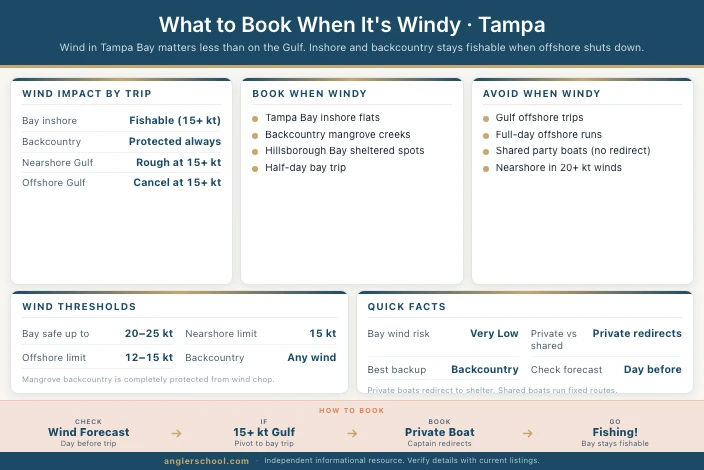
This page is for anglers who’ve looked at the forecast, seen wind in the 15 to 25 knot range, and aren’t sure whether to cancel or push forward. It explains how Tampa Bay’s geography buffers wind impacts, what trip types stay fishable, and when wind actually does become a reason to reschedule.
It’s also useful for travelers who booked a charter weeks in advance and are now watching the weather for the days leading up to the trip.
Good Fit / Bad Fit
- Private bay inshore trips that stay in Tampa Bay's protected interior
- Backcountry mangrove creek fishing where sheltered creeks block wind entirely
- Morning departures before afternoon wind builds in spring and summer
- Anglers flexible on species
- wind-day bay trips produce reliable redfish
- trout
- and sheepshead
- Anyone with a confirmed charter who wants to understand when to go vs when to reschedule
- Nearshore Gulf trips when sustained winds are 20+ knots
- the Gulf gets rough faster than the bay
- Offshore trips on any wind day over 15 to 20 knots
- not viable in those conditions
- Shared party boats that run offshore or nearshore routes on windy days
- Anyone expecting mirror-flat conditions when the forecast calls for 15 to 20 knot winds
Budget Expectations
The wind-day strategy is a private bay charter. Private charters give the captain flexibility to pick sheltered spots based on wind direction, something shared boats running fixed routes can’t do. A private half-day at $600 to $800 split four or five ways runs $120 to $200 per person, competitive with Tampa’s shared rate.
Cancellation and rescheduling policies vary by captain. Most private charter captains won’t send you out in genuinely unsafe conditions, if the weather is too rough, they’ll offer a reschedule. Confirm the cancellation policy when you book.
How Tampa Bay Handles Wind
Tampa Bay’s enclosed geography is the key. The bay is bordered on three sides by land, with only the passes at the southern end connecting to the Gulf. Wind generates surface chop, but the enclosed fetch limits how large waves can build. A 20-knot northeast wind that would produce 3 to 5 foot seas in the open Gulf typically produces 1 to 2 foot chop on the interior bay, manageable for most boat sizes and most anglers.
The backcountry adds another layer of protection. Mangrove creeks and tidal channels behind islands and along the Hillsborough Bay shoreline offer nearly complete wind shelter. In a backcountry skiff, you can fish effectively in 25 to 30 knots of wind because the trees and banks block the wind entirely.
Compare this to a destination like Destin or Key West, where a wind event shuts down most trip options. At Tampa, the bay gives you a meaningful fallback that most Gulf Coast destinations don’t have.
Trip Length Guidance
Morning departures are the standard wind strategy in Tampa. Bay surface winds typically build through the day, peaking in the afternoon. A 7am departure fishes the flattest conditions and wraps up before the choppiest part of the day.
Half-day (4 to 5 hours, morning): The right format for windy-day fishing. You’re in and out before conditions deteriorate. Bay inshore species are active in early morning regardless of wind, and the protected water keeps the trip comfortable.
Full-day in wind: Possible if the wind is moderate and your captain knows the bay well enough to adjust spots throughout the day. More demanding than a half-day in the same conditions. For most groups, a morning half-day is the better choice on forecasted wind days.
Comfort Notes
What 15 to 20 knot winds feel like on the bay: Surface chop, some spray at speed, and a livelier boat motion than a flat-calm day. Not dangerous, but noticeable. Dress in layers, wind on the water is colder than standing on shore, especially in fall and early spring.
What 20 to 25 knot winds feel like: More active bay surface, some whitecaps in open sections, increased spray. Bay trips remain viable for most anglers. Nearshore and offshore trips become inadvisable.
Above 25 to 30 knots: Bay fishing remains possible in sheltered backcountry areas, but open-bay trips become uncomfortable and some captains will choose to reschedule. Offshore and nearshore trips are cancelled.
Seasickness on wind days: Bay chop increases motion compared to flat conditions. If you have any motion sensitivity, take meclizine the night before on a wind-forecast day even for a bay trip. The bay stays significantly calmer than the Gulf, but it’s not the same as a glassy morning.
What to Expect
On a wind-day bay trip, the captain scouts the bay for sheltered areas based on wind direction. You’ll likely fish spots the captain doesn’t use on calm days, protected flats, creek mouths, and structure in the lee of islands. This isn’t a worse trip, the fish are still in the bay and active. The captain’s flexibility to pick wind-sheltered spots is one of the main arguments for private over shared on days with forecast wind.
Dress for the conditions: long sleeves, a windbreaker or light rain layer, and a hat that won’t blow off. Spray on the bay can be significant on a choppy morning even if it’s technically safe to fish.
Redfish and sheepshead often feed aggressively in moderate chop, the current and disturbed water push bait around structure and feeding opportunities increase. Wind days on Tampa Bay aren’t necessarily worse fishing days. They’re just different.
Example Scenarios
A group with a charter booked for an April morning: The forecast showed 18 to 20 knots from the northeast. They called the captain, who said the bay would be choppy but manageable in the south end. They went. The first spot was flat behind a long key. They caught redfish and sheepshead for three hours. The open bay sections were choppier on the way back, but nobody got sick.
A family who’d seen 20-knot forecasts and nearly cancelled: The captain texted them the morning before to say the bay would be fine, the Gulf trips were being cancelled, and that he had a sheltered creek system in mind for their backcountry trip. They went. The creek was glassy. Kids caught snook. Not a single complaint about the conditions.
A couple who’d booked nearshore for king mackerel: The forecast came in at 22 knots sustained from the southwest. The captain offered to reschedule or redirect to a bay inshore trip instead. They redirected and spent a half-day on sheltered bay flats instead. Different species, same good experience.
Book This Trip
- Browse Calm-Water Charters Opens booking platform
- Browse Activity Tours Opens tour booking platform
Frequently Asked Questions
- At what wind speed should I reschedule a Tampa Bay charter?
- Bay inshore and backcountry trips remain viable up to about 25 to 30 knots. Nearshore and offshore trips should be rescheduled above 15 to 20 knots of sustained wind. If you have a morning bay trip and the forecast shows under 20 knots, your captain will almost certainly go. Sustained winds above 25 knots may push even bay captains to reschedule for safety.
- Will the captain notify me if conditions are too rough?
- Yes. Reputable captains monitor the forecast and will contact you if they’re considering a reschedule. You can also check in with them the day before. Captains don’t benefit from sending clients out in genuinely bad conditions, reschedule policies exist for this reason.
- Is Tampa Bay better than Clearwater in wind?
- Both fish the same bay system and have the same rough water risk rating. Tampa’s backcountry (Hillsborough Bay, tidal creeks) may offer slightly more wind shelter than Clearwater’s more open nearshore Gulf approach. Both are significantly better options than Destin or Key West when wind is in the forecast.
- Does wind affect the fishing, or just the comfort?
- Both. Moderate wind (10 to 20 knots) often improves inshore fishing, current and disturbed water push bait into feeding zones and activate redfish and sheepshead around structure. Very strong wind (above 25 knots) makes fishing difficult and uncomfortable. Moderate wind days on the bay can produce excellent catches if the captain picks the right sheltered spots.
More Trips in Tampa
Related pages for weather and comfort planning:
- Seasickness-Friendly Fishing Trips in Tampa: If motion sickness is a bigger concern than wind, this page covers the bay’s overall calm-water advantages.
- Inshore vs Offshore for Families in Tampa: The broader comparison of bay vs Gulf for groups with kids, relevant when weather narrows your options.
- Best Half-Day Fishing Charters in Tampa: Why morning half-days are the most reliable format in variable weather conditions.
- Private vs Shared Fishing Charters in Tampa: Why private charters have more flexibility to pick wind-sheltered spots than shared boats on fixed routes.
Related Guides
Deeper reading on the decisions this page covers:
- What Happens If Weather Cancels Your Fishing Charter?
- Fishing Charter Cancellation Policies Explained
Back to the Tampa fishing charters overview.