What to Book When It's Windy in Panama City Beach
Who This Trip Is For
This page is for anyone arriving in PCB with a charter booked who wakes up to wind, or anyone planning a trip and wanting to understand the realistic risk of conditions canceling their offshore plans.
Wind is the most common reason PCB offshore charters get rescheduled. Understanding the bay fallback before you arrive helps you handle a schedule change without frustration.
Good Fit / Bad Fit
- Anglers flexible enough to switch from Gulf to bay when conditions are rough
- Families who prefer the bay anyway and see wind as a non-issue
- Anyone booking a trip in fall when Gulf swells are more variable
- Groups where one person is seasickness-prone and wind makes the offshore risk higher
- Anglers who want to fish the jetty structure at St. Andrews Pass
- Anglers whose only goal is red snapper or offshore reef fishing
- the bay won't substitute
- Groups who booked specifically for snapper season and have limited days available
- Anyone expecting a guaranteed offshore trip regardless of conditions
- Travelers with fully fixed schedules who can't reschedule if the bay is their fallback
Budget Expectations
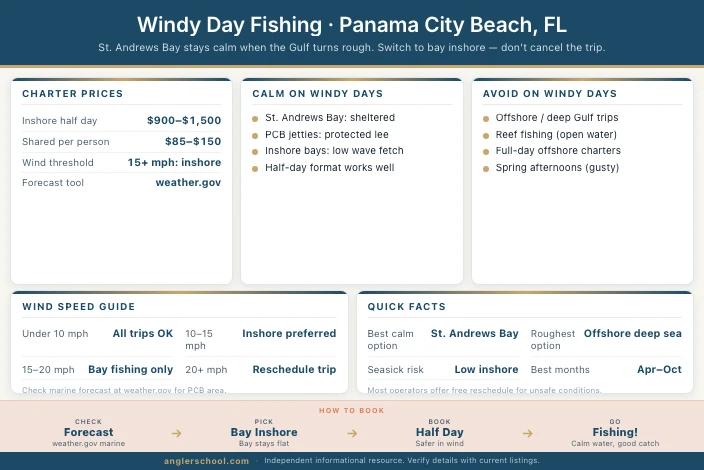
Bay inshore trips are typically priced as private half-day charters. If you’re switching from an offshore trip to a bay trip due to conditions, you may see a rate adjustment depending on the original booking.
A private bay half-day covers the full boat and gives you a captain who knows the bay’s protected pockets. If your original charter was priced for an offshore full-day trip, ask what the adjustment is if conditions force a switch to the bay.
Trip Length Guidance
Bay trips run best as half-day morning departures. The bay is most productive early, before wind picks up through the afternoon. If you’re pivoting to a bay trip on a windy day, depart as early as possible, conditions on the bay can still deteriorate as afternoon winds build even though the bay is sheltered from the worst of the Gulf chop.
A 4 to 5 hour morning bay trip in wind is a genuinely good option. You’ll fish the jetties at St. Andrews Pass, cover the bay’s redfish and flounder grounds, and be back at the dock before the day gets worse.
Comfort Notes
Wind thresholds: Most PCB offshore captains will cancel or reschedule when sustained winds exceed 15 to 20 knots. At 10 to 15 knots, offshore trips become uncomfortable but not necessarily canceled. Gulf swells generated by storm systems can make trips rough even after the wind drops locally.
On the bay in wind: St. Andrews Bay handles moderate wind much better than the open Gulf. Expect surface chop that rocks a small inshore boat but doesn’t create the sustained rolling of open-water swells. For anyone with mild motion sensitivity, the bay in 10 to 15 knot winds is generally manageable.
The jetties in wind: The jetty structure at St. Andrews Pass provides some additional shelter. Fishing near the rocks on the bay side of the pass can stay productive even when the outer sections are getting bumped by sea conditions from the Gulf entrance.
Seasickness risk on windy days: If winds are up and you’re already thinking about rescheduling offshore, you should also be thinking about seasickness risk. A bay trip on a breezy day is a reasonable compromise, fishing still happens, motion risk stays low.
What to Expect
When you arrive and your captain says conditions are rough, the conversation usually goes: “The Gulf is uncomfortable today. I’d recommend the bay.” Good captains don’t put uncomfortable customers offshore just to keep the booking. If they recommend the bay, trust that call.
On a windy bay trip, the captain will choose sheltered pockets and structure-heavy spots. The jetties at St. Andrews Pass are a consistent wind-day option, the rocky structure holds fish and the geography provides a partial wind block. Redfish and flounder in the bay grass edges don’t disappear because the Gulf is rough.
If you absolutely need to reschedule rather than switch to bay fishing, most captains will work with you on timing. The best practice is to check conditions 48 to 72 hours before your trip and communicate with your captain before the day arrives.
Example Scenarios
A family of four in September: They’d booked a private Gulf trip for grouper. A tropical disturbance 200 miles out had the Gulf running 4-foot swells. The captain called the night before and recommended the bay. They pivoted to a morning bay trip, caught redfish and flounder, and fished the jetties for the last hour. They said it turned out to be the highlight of the trip.
A group of two couples in May: Wind forecast was 18 knots on their offshore booking day. They’d been watching the forecast all week. Their captain confirmed offshore was running but would be bumpy. They decided to switch to the bay, one person in the group was already nervous about motion. Good call.
A solo angler in November with only one day available: The Gulf was choppy and his captain couldn’t guarantee an offshore trip. He decided to roll the dice on the offshore run anyway, understanding the conditions. Came back damp and didn’t catch much. The captain later said the bay would have been more productive that day.
Book This Trip
- Browse Calm-Water Charters Opens booking platform
Frequently Asked Questions
- How do I know if my PCB offshore charter will be canceled due to wind?
- Watch wind forecast sites (Windy, Weather Underground) in the 48 to 72 hours before your trip. Your captain will typically reach out the night before if conditions look bad. Sustained winds of 15 to 20 knots or seas over 3 to 4 feet are the usual thresholds where PCB offshore captains recommend switching to the bay or rescheduling.
- Is St. Andrews Bay a good fallback when offshore is rough?
- Yes. The bay produces real fish, redfish, flounder, and jetty snapper, regardless of what the Gulf is doing. It’s not a consolation trip. Some anglers prefer the bay even when the Gulf is calm because the species variety and shorter format suit their group better.
- Do party boats cancel when it's windy?
- Party boats have higher cancellation thresholds than small private charters because they run larger, more stable vessels. They’ll run in conditions that would keep a small inshore boat at the dock. However, they also can’t pivot to bay fishing, party boats run Gulf routes only.
- What months have the most wind risk in Panama City Beach?
- November through March brings the most variable Gulf conditions, with winter cold fronts generating sustained north and northwest winds. Summer afternoon sea breezes are predictable (15 to 20 knots most afternoons) but manageable with morning departures. Fall, particularly September and October, can bring post-hurricane swells and unsettled conditions even when local weather looks fine.
More Trips in Panama City Beach
- Seasickness-Friendly Fishing Trips in Panama City Beach: Wind and rough water are the biggest seasickness triggers, this page covers the full calm-water strategy.
- Inshore vs Offshore for Families in Panama City Beach: If wind is already pushing you toward the bay, this comparison helps you understand how the two trip types differ.
- Best Half-Day Fishing Charters in Panama City Beach: Bay trips run naturally as half-day formats, this page covers what a half-day on the bay actually involves.
- Family Fishing Charters in Panama City Beach: How wind-day decisions play out specifically for families with kids.
Related Guides
Deeper reading on the decisions this page covers:
- What Happens If Weather Cancels Your Fishing Charter?
- Fishing Charter Cancellation Policies Explained
Back to the Panama City Beach fishing charters overview.