What to Book When It's Windy in Miami: Your Backup Plan
Who This Trip Is For
This page is for people who have an upcoming Miami fishing trip and are watching a rough weather forecast. It’s also useful for anyone planning a trip during South Florida’s windier months (November through February) and wanting to understand their options before they book.
Miami sits on the Atlantic, and the offshore water has no Gulf-side protection. When wind builds, swells build. The upside is that Miami has real sheltered alternatives. Not every Florida destination does.
Good Fit / Bad Fit
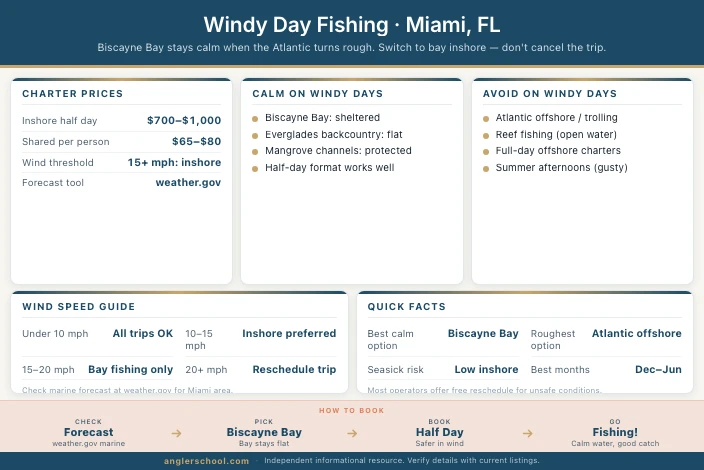
- Biscayne Bay private half-day when offshore wind is 15 mph or above
- Everglades backcountry trips when conditions warrant a longer sheltered run
- Families and seasick-prone anglers who need protected water regardless of wind
- December through February trips when cold fronts push through and offshore conditions fluctuate
- Anglers flexible on species who care more about comfort than targeting sailfish specifically
- Anyone set on sailfish and refusing to book a calm-water alternative on a rough day
- Offshore and reef trips when sustained wind is above 15 to 20 mph
- Groups expecting to fish deep open Atlantic water during a front passage
- Anglers who won't rebook or reschedule
- most conditions improve within 24 to 48 hours after a front
- Trips booked in August or September regardless of wind
- hurricane season is a larger issue
Budget Expectations
Shifting to a Biscayne Bay or Everglades trip on a windy day doesn’t necessarily mean spending more. Bay boats are often priced the same as or slightly below offshore charter rates.
A Biscayne Bay private half-day typically falls in the lower end of the half-day range, bay boats are smaller than offshore sportfishers and carry lower operating costs. The full-day price applies if you’re planning an Everglades trip, which requires more travel time to reach the backcountry grounds.
Shared boats almost never run Biscayne Bay routes. If you want a sheltered alternative on a windy day, private is your realistic option.
Trip Length Guidance
For a Biscayne Bay windy-day alternative, a half-day (4 to 5 hours) is usually the right choice. The Bay fishing doesn’t require longer time on the water to be productive, and getting home before the afternoon wind peak (which often intensifies mid-day) keeps conditions stable throughout your trip.
Everglades backcountry trips typically run half-day or full-day depending on how far into the system you want to go. If you’re specifically targeting redfish and mangrove snook in the deeper backcountry channels, a full-day is more appropriate. A half-day Everglades trip gives you the experience but limits how far in you can get.
Comfort Notes
How windy is too windy offshore? A general rule: sustained winds of 15 mph or higher push Atlantic reef and offshore trips into uncomfortable territory for most people. Above 20 mph sustained, offshore conditions are rough enough that many captains cancel voluntarily. Check the marine forecast, not the land forecast, before your departure. NOAA marine forecasts for South Florida provide offshore and coastal zone predictions.
Biscayne Bay in the wind: The Bay is sheltered by barrier islands and mangroves. Even with 20 to 25 mph winds, Biscayne Bay usually remains fishable, though the captain may adjust their route to stay in the most protected sections.
Everglades in the wind: The backcountry mangrove channels are even more protected than the Bay. Wind barely touches the deep backcountry routes. Rain and cold fronts are more relevant concerns there than surface chop.
Seasickness risk on a windy day: If you’re going offshore in rising wind, take medication the night before and the morning of the trip. Don’t wait to see how it feels. The motion compounds quickly as wind increases. A Biscayne Bay trip in the same wind carries negligible seasickness risk.
What to Expect
If your captain proactively calls to suggest a route change from offshore to the Bay, that’s a good sign. It means they’re reading the conditions and thinking about your experience rather than just running the trip as scheduled and hoping it works out. Take the suggestion.
On a Biscayne Bay trip, you’ll fish structure, dock pilings, channel edges, grass flats, and mangrove shorelines, for snook, tarpon, and snapper. The boat runs slowly through protected water. There’s no significant wave exposure. Wind may affect casting, but the boat itself stays stable.
In the Everglades backcountry, the captain navigates narrow mangrove channels where the tree line on both sides blocks almost all wind. The fishing is sight-fishing in many cases, poling quietly over flats looking for redfish tailing or snook stacked in the channel mouths.
If you don’t want to change your trip type, the other realistic option is to reschedule. Most captains in Miami offer flexible rescheduling for weather-related cancellations. Ask about the cancellation policy when you book, not the morning of your trip.
Example Scenarios
A couple who booked a sailfish trip and woke up to a front forecast: The captain calls the morning before and explains conditions have deteriorated, 18 mph sustained with building swells. He offers a Biscayne Bay half-day at the same price. They take it. They catch snook and a small tarpon. Not sailfish, but a genuinely good morning on calm water.
A family of four with a fixed vacation schedule: They can’t reschedule. The offshore was their plan but the forecast shows 20 mph winds on the Atlantic. Their captain recommends the Bay. The kids (ages 8 and 10) have a better time in calm water than they would have had offshore in chop. The parents later say the windy-day switch was the best thing that happened to their trip.
A solo angler targeting snook: He specifically booked Biscayne Bay because he’s targeting snook, not offshore species. The wind doesn’t affect his plan at all. He fishes the Bay in a 25 mph wind without any issue because the water stays protected and the snook are active regardless.
Book This Trip
- Browse Calm-Water Charters Opens booking platform
- Browse Activity Tours Opens tour booking platform
Frequently Asked Questions
- What's the marine forecast I should check before a Miami fishing trip?
- The NOAA National Weather Service issues marine zone forecasts for Miami coastal waters and offshore zones. Check the forecast for the specific zone you’ll be fishing. Coastal Waters from Deerfield Beach to Ocean Reef is the relevant zone for most Miami charters. Sustained winds above 15 mph with swells over 3 feet are a reliable signal to ask your captain about a route change or reschedule.
- Will my captain cancel if conditions are too rough?
- Many captains in Miami will proactively cancel or offer to reschedule when offshore conditions deteriorate to unsafe levels. Some won’t cancel unless you ask. Review the cancellation policy when you book and ask the captain what wind speed triggers a reschedule offer. Don’t assume the trip is automatically safe because no one has called you.
- Can I still fish if there's a tropical storm watch or hurricane watch?
- No. Under any active tropical storm watch or warning, all charter activity is suspended. August and September are the peak months for these conditions in Miami. Booking trips in those months carries real cancellation risk that’s hard to mitigate. Stick to December through June for the best combination of weather reliability and good fishing.
- Is the Everglades backcountry a good fallback on any windy day?
- Yes, but logistics matter. Everglades trips require more travel time to reach the backcountry from Miami than a Biscayne Bay trip does. Confirm with your captain how long the run takes and whether the trip still makes sense for the time you have. For half-day trips, the Everglades is tighter on time. Full-day Everglades backcountry trips are the most comfortable timeline.
More Trips in Miami
These pages cover related situations:
- Seasickness-Friendly Fishing Trips in Miami: Wind and rough water go together. This page goes deeper on how to protect yourself if motion sickness is a concern.
- Inshore vs Offshore for Families in Miami: A full comparison of both water types that helps you understand what you’re switching to when you move from offshore to the Bay.
- Best Beginner Fishing Charters in Miami: Biscayne Bay is also the right starting point for beginners, not just windy-day fallbacks.
- Family Fishing Charters in Miami: If you’re on a family trip affected by rough weather, this page covers the full picture.
Related Guides
Deeper reading on the decisions this page covers:
- What Happens If Weather Cancels Your Fishing Charter?
- Fishing Charter Cancellation Policies Explained
Back to the Miami fishing charters overview.