Seasickness-Friendly Fishing Trips in Fort Lauderdale
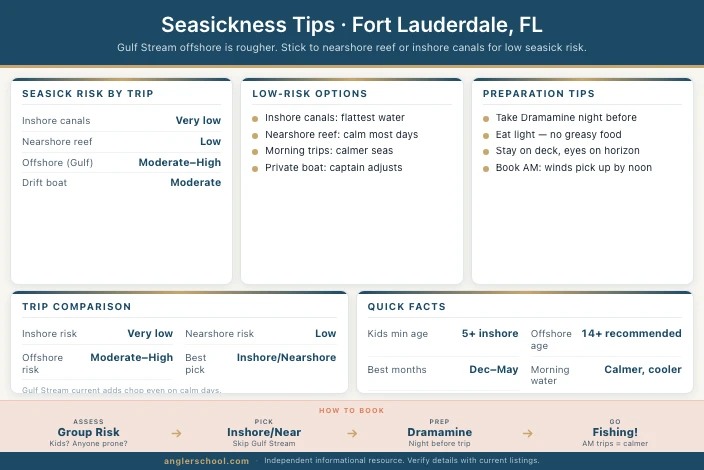
Who This Trip Is For
This page is for anyone who has experienced seasickness before, travels with someone who gets motion sick, or wants to understand the real risk before committing to a Fort Lauderdale charter.
Being honest here: Fort Lauderdale is not the easiest Florida destination for sensitive stomachs. It’s not the worst either.but the Atlantic facing location means open-ocean conditions that Gulf destinations like Clearwater or Tampa simply don’t have. The good news is that options exist, and preparation dramatically reduces the risk.
Good Fit / Bad Fit
- People with mild motion sensitivity who prepare with medication in advance
- anyone booking morning departures when seas are calmest
- groups willing to book inshore canal trips as an alternative
- visitors in April to May when Atlantic conditions tend to be gentler
- reef trips in calm weather on private charters that can return early if needed
- Highly motion-sensitive individuals who have gotten sick on car trips or boat tours
- anyone who refuses to take seasickness medication
- families hoping to book a drift boat (no early return option if someone gets sick)
- visitors in January to February during active cold-front season when swells are most persistent
Budget Expectations
Choosing the right trip type for seasickness prevention is more important than price here. Canal inshore trips and offshore reef trips both fall in the same private charter range.
Private is the right format for anyone managing seasickness risk. A private captain can return early if someone is truly unwell. Drift boats run fixed schedules and won’t divert for a sick passenger.
If budget is the constraint and you’re using a drift boat, you’re accepting the risk that you cannot leave early. The drift boat itself is a larger, heavier vessel that rolls less than a small private boat in chop.which provides some offset.but the inability to turn back is the real problem.
Trip Length Guidance
Shorter is better when managing seasickness risk. A 4-hour morning trip minimizes your exposure window and puts you on the water during the calmest part of the day.
If you have serious concerns, a 3-hour inshore canal trip in completely protected water is the safest format. Species variety is lower, but so is the risk.
Full-day offshore trips are not recommended for anyone with seasickness history. Eight to ten hours on open Atlantic water is a long time to manage symptoms.
Comfort Notes
Medication (the most effective tool)
- Dramamine (dimenhydrinate): Over-the-counter, effective, causes drowsiness. Take the night before and morning of the trip.
- Bonine (meclizine): Over-the-counter, less drowsy than Dramamine. Preferred by many anglers. Take 1 hour before boarding.
- Scopolamine patch: Prescription only. Worn behind the ear, effective for 72 hours. Best option for serious sensitivity. See your doctor before the trip.
- Ginger: Natural option; ginger chews or capsules help some people. Works best as a complement to medication, not a replacement.
On-the-water tips
- Stay on deck: Fresh air and a fixed horizon reduce symptoms. Don’t go below deck if feeling queasy.
- Face forward: Facing the direction of travel helps.
- Avoid strong food smells: Don’t eat a heavy breakfast. Crackers or light food is better.
- Avoid alcohol: Even the night before. Alcohol significantly worsens seasickness.
- Morning over afternoon: Seas build as the day progresses. Afternoon trips in Fort Lauderdale are often rougher than morning.
What to Expect
For a reef trip aimed at minimizing seasickness risk:
You’ll depart at first light on a morning with forecast winds under 15 mph. The captain runs to the nearest productive reef.often 3 to 4 miles offshore. In calm conditions, the anchored or slow-drifting boat rocks gently but rhythmically, which most people tolerate well.
Rough patches happen when waves are confused (crossing swells from different directions) or when a swell has built from an overnight storm. These conditions are hardest to predict. Your best protection is medication taken in advance.
For a canal inshore trip: you never leave protected water. The Intracoastal and canal system has minimal wave action. If someone in your group has a history of extreme seasickness, this is the trip type to book in Fort Lauderdale.
Example Scenarios
A couple has a history of getting seasick on whale-watching boats. They take Bonine the night before and morning of a February reef trip. One partner feels slightly queasy on the return run but manages. The other is fine throughout. They consider it a success and plan to try again on a calmer day in April.
A group of five includes one person who gets severely ill in any boat motion. Instead of risking a reef trip, they book a canal inshore trip. Flat water, no drama. The sensitive passenger catches snook without issue. The rest of the group considers doing a separate offshore trip later in the week.
A solo traveler skips medication and books a drift boat for a January morning. The seas are 3 to 4 feet from an overnight cold front. He gets sick within an hour and misses most of the fishing. Next trip, he takes Bonine.
Book This Trip
- Browse Calm-Water Charters Opens booking platform
- Browse Activity Tours Opens tour booking platform
Frequently Asked Questions
- How bad is seasickness risk in Fort Lauderdale compared to other Florida destinations?
- Moderate.higher than Gulf Coast destinations like Clearwater, Tampa, or Naples, and comparable to Miami and West Palm Beach. The Atlantic facing location produces real ocean swells from Gulf Stream currents and seasonal fronts. Calmer than a deep offshore run but rougher than any bay or estuary fishing.
- Which seasickness medication works best for a fishing charter?
- Bonine (meclizine) is the most popular choice among regular charter anglers because it’s non-drowsy and effective. Take it one hour before boarding, or the night before for a morning departure. For severe sensitivity, ask your doctor about a prescription scopolamine patch before the trip.
- Are drift boats better or worse than private charters for seasickness?
- The boat itself matters less than your ability to return early. Drift boats are larger and heavier, which can mean slightly less roll. But they run fixed schedules.if you get sick, you’re stuck until the scheduled return. Private charters can turn back early if needed. For anyone with seasickness concern, private is the safer format.
- Can I fish in Fort Lauderdale without going offshore if I get seasick?
- Yes. Canal and Intracoastal inshore trips stay in protected water with no ocean swell. Species variety is lower (snook, jack, small snapper), but the risk of seasickness is essentially zero. Look for captains specifically offering inshore canal trips when you book.
More Trips in Fort Lauderdale
- What to Book When It’s Windy: Windy days amplify seasickness risk; here’s how to plan
- Inshore vs Offshore for Families: A full comparison of calm canal trips vs. offshore reef
- Family Fishing Charters: Managing seasickness risk for families with mixed tolerances
- Best Fishing Charters for Kids: Age guidance and seasickness prep for younger anglers
Related Guides
Deeper reading on the decisions this page covers:
Back to the Fort Lauderdale fishing charter guide.