Seasickness-Friendly Fishing Trips in Clearwater, FL
Who This Trip Is For
This page is for anglers who have experienced seasickness before, have never been on a moving boat and don’t know how they’ll respond, or want to travel with someone who can’t handle rough water. It covers why Clearwater’s Tampa Bay is different from other Florida fishing environments and what to book if motion sickness is a real concern.
Clearwater is the right destination if you’ve canceled or avoided a fishing trip in the past because of seasickness risk. The bay changes the calculation entirely.
Good Fit / Bad Fit
- Anglers who have had seasickness on previous boat trips
- First-timers who don't know how they'll respond to being on the water
- Families with young kids who've gotten carsick on road trips
- Anyone who wants to fish Florida but has been deterred by rough water at other destinations
- Groups where one person is sensitive to motion and the whole trip hinges on their comfort
- Anglers who specifically want offshore species like grouper or snapper (those require a Gulf run with some wave exposure)
- Anyone assuming the Gulf side of Clearwater is as calm as the bay (nearshore and offshore Gulf trips carry some motion risk)
- Travelers booking in December or January when bay species slow considerably
Budget Expectations
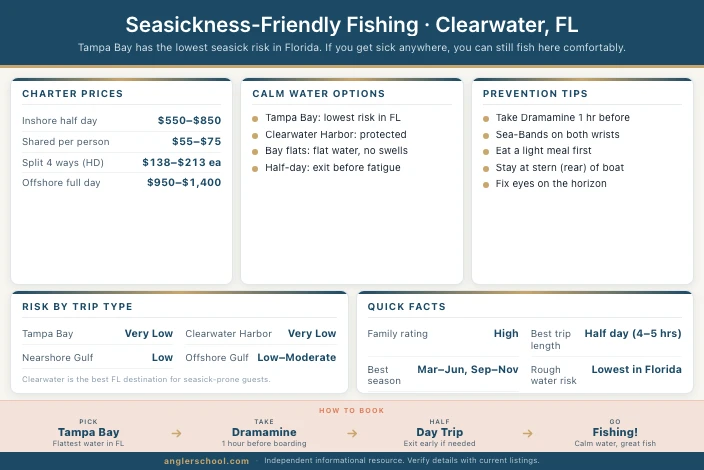
Bay inshore trips are typically half-day, the right option for seasickness-prone anglers and the format that keeps costs at the lower end of the range. Clearwater’s prices are the lowest in Florida, so the combination of calm water and low cost is unique to this destination.
If you want the most flexibility to adjust routing if anyone gets uncomfortable, book private rather than shared. At Clearwater’s rates, private half-day runs $550 to $850 total. A private captain can move to the most sheltered bay spots at any time; a shared boat cannot.
Why Tampa Bay Works
Most seasickness happens when a boat pitches and rolls in ocean swells. The height of swells depends on wave fetch, meaning how much open water wind travels over before reaching the boat. In open-water environments like the Atlantic coast or the deep Gulf, fetch is measured in hundreds of miles. Tampa Bay’s fetch is measured in tens of miles, and often much less depending on wind direction.
The practical result: a 15 mph wind that would produce 3- to 4-foot swells off Miami barely creates ripples in Tampa Bay. The boat stays relatively stable, and the vestibular disruption that causes most seasickness doesn’t happen at the same intensity.
This isn’t a matter of degree. It’s a structural difference between an enclosed bay fishery and an open-water fishery. Clearwater has the lowest rough water risk rating in this guide for the same reason.
Trip Length Guidance
A half-day bay trip (4 to 5 hours) is the right choice for anyone concerned about seasickness. Shorter exposure time means less cumulative risk, even on the calmest water. The bay’s morning departures (7am) also avoid the afternoon chop that can build as daytime winds pick up.
Full-day trips increase exposure time and are more likely to include a Gulf run to reach offshore structure. For anyone with seasickness concerns, full-day offshore trips are the wrong starting point. The bay half-day is the right first experience; you can evaluate how you responded and expand from there.
Practical Prevention
Even on Tampa Bay, precautions take nothing away from the experience and provide real insurance:
- Scopolamine patch (Transderm Scop): Prescription patch applied behind the ear 4 hours before boarding. Most effective for chronic sufferers.
- Dramamine (dimenhydrinate): Over-the-counter. Take the night before and morning of the trip. Non-drowsy formulas are available.
- Bonine (meclizine): Similar to Dramamine, generally considered to cause less drowsiness.
- Ginger: Ginger chews, ginger ale, or ginger capsules. Lower ceiling of effectiveness but no drowsiness.
Day-of practices that help:
- Eat a light breakfast (empty stomach worsens seasickness; heavy meal isn’t better)
- Stay on deck rather than below
- Fix your gaze on the horizon if you feel early symptoms
- Avoid reading or looking at a phone screen while underway
What to Expect
On a Tampa Bay inshore trip, the boat will ride smoothly from the dock to the first fishing spot. You might cross a small wake from another boat, which causes brief rocking. Nothing sustained. Once anchored or drifting over a flat, the boat barely moves.
The most common discomfort on a bay trip is from heat and sun exposure, not motion. Stay hydrated, wear a hat, and keep sunscreen applied. Bringing your own water is smarter than relying on what’s on the boat.
If anyone in your group starts feeling off mid-trip, tell the captain. A private charter captain can adjust routing, slow down, or head back if needed. This flexibility is one of the main reasons private is better than shared for motion-sensitive groups.
Example Scenarios
A couple who canceled a previous Key West trip due to seasickness concern: They’d heard offshore fishing from Key West involves real ocean exposure. They book a Clearwater bay half-day instead. One of them has had mild seasickness on ferry boats before. They take Dramamine the night before and have a comfortable three-hour bay trip catching trout and redfish with no issues.
A family where the mom has chronic motion sickness: She’s never been on a boat and is nervous. They book a private bay half-day in Tampa Bay. Conditions are flat the whole morning. She doesn’t feel any motion, catches two fish, and is ready to come back. Her kids catch more.
Three adults, one of whom gets queasy on any boat: They book private specifically because if he gets uncomfortable, they can head in without affecting a shared boat’s schedule. He takes Bonine the morning of the trip, fishes the bay for three hours without incident, and doesn’t need to use the early-out option.
Book This Trip
- Browse Calm-Water Charters Opens booking platform
- Browse Activity Tours Opens tour booking platform
Frequently Asked Questions
- Is Tampa Bay really calm enough to fish with severe seasickness?
- For most people, yes. Tampa Bay’s enclosed geography limits wave height in a way that open-water environments cannot. People who’ve had severe seasickness on Gulf or Atlantic fishing trips regularly complete comfortable bay trips in Clearwater. Individual responses vary, but the bay is Florida’s most forgiving environment for motion-sensitive anglers.
- Should I take seasickness medication for a bay trip in Clearwater?
- It’s a personal call. The risk is low enough that many people don’t need it. If you’ve had seasickness before or want extra insurance, take Dramamine or Bonine the night before. The cost is minimal and it eliminates most residual risk.
- What if I get sick on the water anyway?
- Tell the captain immediately. On a private charter, they can adjust routing or head back if needed. Stay on deck, focus on the horizon, and avoid looking at a screen. Seasickness usually passes faster in calm water than in ocean swells, and the bay’s conditions give you the best possible environment to recover.
- Is nearshore or offshore fishing in Clearwater safe for seasick-prone anglers?
- Nearshore Gulf trips carry some wave exposure, especially in moderate wind. Offshore trips carry more. For seasick-prone anglers, the bay is the right choice. Nearshore can work for people with mild concerns on calm days; ask the captain about conditions when you book.
More Trips in Clearwater
Concerned about conditions? These pages cover related questions:
- What to Book When It’s Windy in Clearwater: Why wind affects Clearwater less than any other Florida destination and what to book on rough-forecast days.
- Inshore vs Offshore for Families in Clearwater: The full comparison of bay and Gulf trips for groups with comfort concerns.
- Best Beginner Fishing Charters in Clearwater: For first-timers who aren’t sure how they’ll respond to being on the water.
- Family Fishing Charters in Clearwater: How bay fishing protects the whole family, including younger kids with no sea experience.
Related Guides
Deeper reading on the decisions this page covers:
Back to the Clearwater fishing charters overview.