Inshore vs Offshore for Families in Clearwater, FL
Who This Trip Is For
This page is for families who want to understand the practical difference between a Tampa Bay inshore trip and a Gulf offshore trip before booking. It’s especially useful if you have kids who haven’t been on a charter before, someone in the group who gets motion sick, or a budget that makes the charter length and price a factor.
Clearwater is unusual because the inshore option here, Tampa Bay, is large enough and productive enough to be a complete fishing experience on its own. You’re not choosing between “real fishing” and “kid fishing.” You’re choosing between two different fisheries with different species, conditions, and trip profiles.
Good Fit / Bad Fit
- Families with kids under 12 who want calm water and steady action
- Groups where anyone is prone to motion sickness
- Budget-conscious families where a half-day bay trip covers most of what they want
- Parents who want flexibility to adjust the trip if a kid gets uncomfortable
- Anyone targeting tarpon
- redfish
- trout
- or snook specifically
- Groups who specifically want grouper or snapper (those need offshore Gulf trips)
- Experienced anglers who want to cover more ground than a bay allows
- Families with older teens who are ready for bigger water and bigger fish
- Anyone booking in December or January when bay species slow down significantly
Budget Expectations
Inshore bay trips are typically half-day, which keeps costs lower.
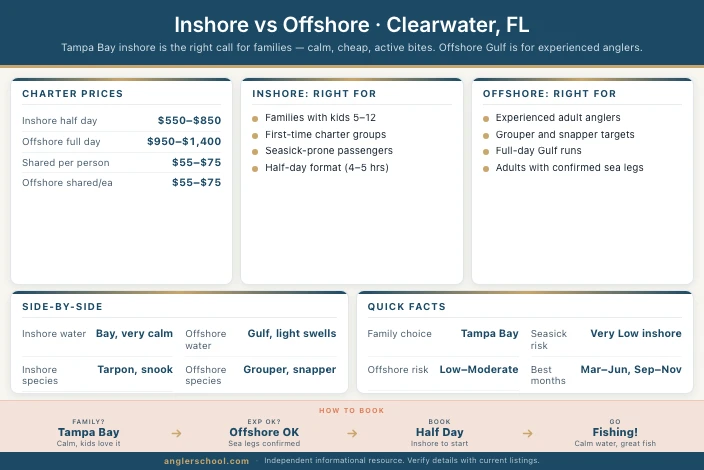
An inshore bay half-day in Clearwater runs $550 to $850 for a private charter. Offshore trips that reach grouper and snapper reefs typically require a full day and run $950 to $1,400. The price gap reflects both the trip length and the fuel cost of reaching offshore structure.
For most families, the inshore half-day is the right economic choice as well as the right comfort choice. You pay less, spend less time in the sun, and keep the trip at a length that kids handle well.
Inshore vs Offshore: Side-by-Side
| Factor | Tampa Bay Inshore | Gulf Offshore |
|---|---|---|
| Water conditions | Calm, protected | Moderate Gulf swell |
| Run time to fishing | 10 to 30 minutes | 60 to 90+ minutes |
| Trip length needed | Half-day (4 to 5 hrs) | Full day (8 to 10 hrs) |
| Target species | Tarpon, redfish, trout, snook | Grouper, snapper, king mackerel |
| Seasickness risk | Low | Low to moderate |
| Kids under 10 | Strong fit | Hard on young kids |
| Price range | $550 to $850 (private half-day) | $950 to $1,400 (private full-day) |
Trip Length Guidance
An inshore bay trip in Clearwater runs 4 to 5 hours and targets the bay fishery without extended runs. That’s the right length for most families with kids. The fishing starts quickly and ends before anyone gets worn out.
Offshore trips that reach productive grouper grounds typically require a full day because the run alone takes an hour or more each way. A full-day offshore trip means 8 to 10 hours on the water for a family that may have kids who hit their limit by hour five or six.
If your family has older kids (teens) who are interested in grouper or bigger fish and have some prior boat experience, an offshore full-day can make sense. For younger kids or first-timers, start inshore and save the offshore trip for a later visit.
Comfort Notes
Seasickness: Tampa Bay’s protected geography means minimal wave action. Even on windy days, the bay stays calm relative to any Gulf exposure. For families with kids who’ve had motion sickness before or who’ve never been on a moving boat, the bay removes most of the risk.
Gulf nearshore vs offshore: “Nearshore” in Clearwater means the area just outside the bay mouth in the Gulf, typically in 20 to 40 feet of water. This is calmer than true offshore but involves more wave exposure than the bay. For families with mild seasickness concerns, nearshore can work; for families with strong concerns, staying in the bay is the right call.
Shade and bathrooms: Inshore bay boats tend to be smaller than offshore vessels. Ask about shade and onboard heads when you book. Offshore boats generally have more amenities because the trips are longer.
What to Expect
On a Tampa Bay inshore trip: You’ll fish grass flats, channel edges, and structure within the bay. The captain moves between spots based on where fish are holding. The ride is smooth and the fishing grounds are close. Most of the trip is spent actively fishing.
On a Gulf offshore trip: The boat makes a longer run, crosses the bar at the bay mouth, and continues into the Gulf. For a grouper trip, you’ll anchor or drift over bottom structure in 50 to 100-plus feet of water. The ride out can be rough on choppy days, and downtime between bites is longer than on a bay trip.
Families with younger kids almost always report that the inshore bay experience feels more engaging: more movement, more spots, more variety in the catch.
Example Scenarios
A family of four in May, kids ages 7 and 10: They ask about tarpon season and whether to go inshore or offshore. The captain confirms tarpon are running hard in the bay right now. They book a private bay half-day and both kids hook tarpon. The 7-year-old needed help fighting the fish to the boat. Nobody got seasick; nobody wanted to leave early.
A couple with two teens, ages 14 and 16: Both teens have been on boats before and want to try grouper. They book a private full-day offshore trip and spend the morning on reef structure. The older teen pulls a red grouper to the boat and is ready to book again. This is a family that’s outgrown the inshore-first logic.
A family visiting from the Midwest, no ocean experience: The parents aren’t sure how the kids (ages 8 and 9) will handle a moving boat. They book an inshore bay half-day as a test run. Kids love it, parents aren’t sick, and they’re at the beach by noon. They plan an offshore trip for the next visit.
Book This Trip
- Browse Family Charters Opens booking platform
- Browse Activity Tours Opens tour booking platform
Frequently Asked Questions
- Is Tampa Bay fishing actually good, or is it just the safe option for nervous families?
- Tampa Bay is a legitimate, high-quality fishery. Tarpon, redfish, and spotted seatrout are all abundant, seasonally predictable species. The bay isn’t a fallback. It’s the main event for most Clearwater charters. Offshore trips add different species, not better fishing.
- How far offshore do Clearwater boats have to go for grouper?
- Productive grouper grounds off Clearwater are typically 50 to 100-plus feet of water, which requires an hour or more of running each way. That’s a meaningful commitment for a family with younger kids and one of the main reasons inshore half-day trips make more sense for most families.
- What about nearshore fishing? Is that a good middle ground?
- Nearshore trips fish the area just outside the bay mouth in mild Gulf conditions. They can be a good middle ground for families with older kids or mild seasickness concerns. You’ll target Spanish mackerel, trout, and some flounder species at shorter distances than offshore. Ask your captain about a nearshore option if you want something between bay-only and full offshore.
- Can we catch tarpon on an offshore trip?
- Tarpon in Clearwater are primarily a bay species, especially during the April through June peak. Offshore trips don’t target tarpon. You’ll find them in the bay channels, not on offshore reefs.
More Trips in Clearwater
Deciding on a trip style? Compare related options:
- Family Fishing Charters in Clearwater: Overview of all family-focused options in Clearwater with age guidance and what to budget.
- Best Fishing Charters for Kids in Clearwater: Focused specifically on younger children, with species expectations and comfort tips.
- Seasickness-Friendly Fishing Trips in Clearwater: Why Clearwater’s bay is Florida’s best option for motion-sensitive anglers.
- What to Book When It’s Windy in Clearwater: How wind affects inshore vs offshore trip options in Clearwater.
Related Guides
Deeper reading on the decisions this page covers:
Back to the Clearwater fishing charters overview.